

The structure of a detachable plate heat exchanger
Release time:
2021-02-05 12:00
Source:
Disassembleable plate heat exchangers are currently the most popular household heat exchangers, especially in winter. In cold climates, if the house does not have heating, using this type of disassembleable plate heat exchanger is very practical. A good disassembleable plate heat exchanger can bring endless heat to the room, providing warmth for people and drying clothes, etc.
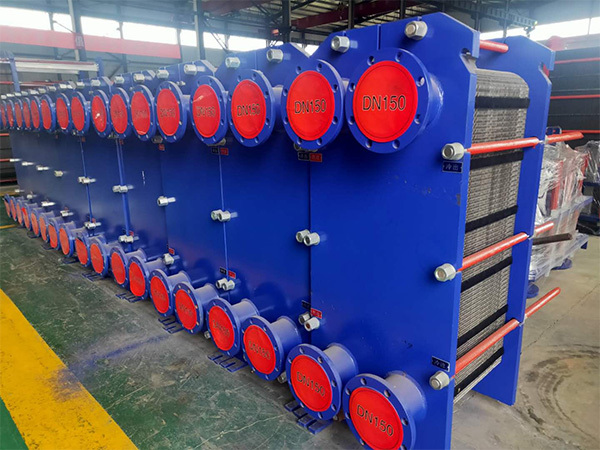
Disassembleable plate heat exchangers are composed of pillars, plate metal sheets, pressure stabilizers, heating exchangers, liquid circulation devices, sterilization systems, insulation systems, high-efficiency heat transfer, and disassembleable separation structures, etc. The pillars are the main frame structure that supports the entire heat exchanger. The main shape of a disassembleable plate heat exchanger relies on the pillars, which is the main distinction between different types. Ensuring the distance between the heating plates, the heat dissipation range, and good connection are all accomplished by the pillars. The plate metal sheets are the so-called heating radiators. High-conductivity materials are used here, which have a good heat transfer effect and can quickly dissipate the generated heat, heating the surrounding air, and ensuring the effective use of space heat. The pressure stabilizer is a very important central structure. High-power electrical appliances have a major flaw: if the voltage fluctuates, it is easy to burn out the appliance or prevent the appliance from working well, failing to meet the power requirements. The pressure stabilizer ensures that the appliance always has a stable voltage output and current loop during use; even if there is a power failure, it will also form timely self-protection, delaying the power outage time and protecting the appliance from power outages. The heating exchanger transfers the internal heat to the metal sheet through the principle of the exchanger, achieving continuous diffusion and direct external transmission of thermal energy. The liquid circulation device is the core heat source of the disassembleable plate heat exchanger. The inside of a disassembleable plate heat exchanger is generally a water and oil heat medium; oil is used more often because oil heats up faster, has a higher temperature, has less circulation loss, and can also provide better self-coating protection to the inner wall, and the heat loss is also slower, with high utilization.
The sterilization system and insulation system of the disassembleable plate heat exchanger are also very useful and can sterilize and disinfect in a timely manner. More importantly, the disassembleable plate heat exchanger can be disassembled and installed as needed according to the size of the space and the degree of heating; use as much as needed, and disassemble what is not needed, making it flexible and versatile.
Related News
WeChat Mini Program
WeChat public account
Service line:
Mobile:+86-15064136769
+86-13869137166
Mailbox:zhilin@sdzhilin.cn
Address: South Park, Jinan Economic Development Zone, Shandong Province