

Plate heat exchanger
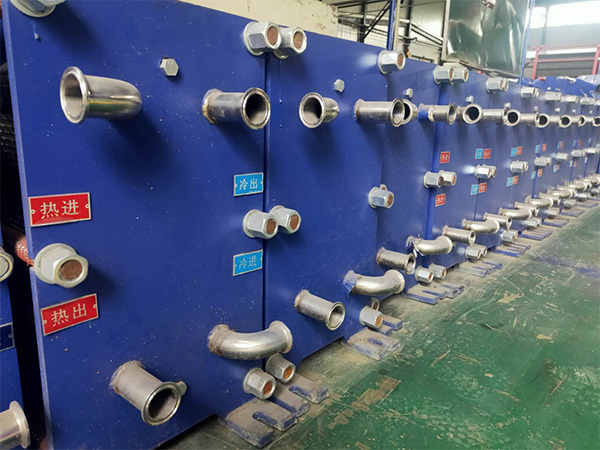
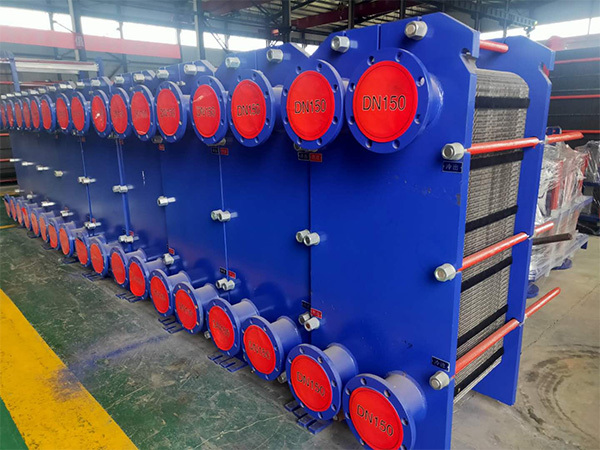
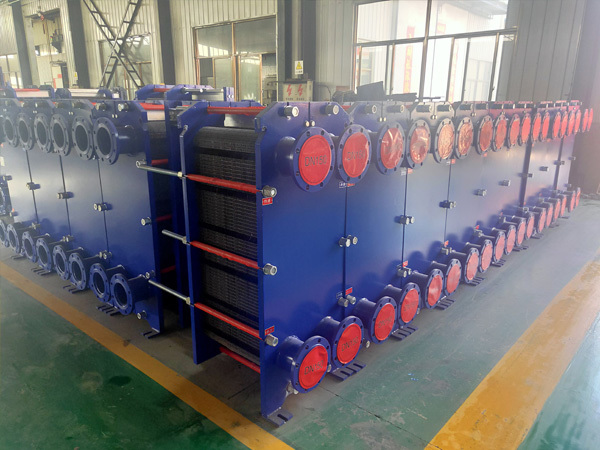
A plate heat exchanger is a dismountable heat exchange device composed of many corrugated heat transfer plates pressed together at certain intervals by rubber gaskets. When the plates are assembled, two sets are arranged alternately, and the plates are fixed together with rubber sealing strips to prevent liquid leakage and form narrow mesh-like flow channels between the plates. The heat transfer plates are pressed into various corrugated shapes to increase the heat transfer area and rigidity, and to enable the liquid to form turbulence at low flow rates to enhance heat transfer. The four corner holes on the plate form the liquid distribution and collection pipes, and the two heat transfer media flow into their respective channels, forming a countercurrent flow through each plate to exchange heat.
Classification:
Product Center
Details
Shandong Zhilin Environmental Protection Technology Co., Ltd. is engaged inIntelligent heat exchange units, plate heat exchangers, heat exchangers, shell and tube heat exchangers, volumetric heat exchangers, Shandong plate heat exchangersheat network heaters, high-efficiency plate heat exchangers, dismountable plate heat exchangersheat exchanger manufacturers. Products are widely used in chemical, chemical fertilizer, pharmaceutical, petroleum, steel, liquor, food, beverage, printing and dyeing, power, coatings, rubber, heating, hotels and other departments, and can also meet the heating, cooling, condensation, heat recovery and different process requirements. The company has a strong reserve of technical personnel and has an experienced R&D and design team. Relying on advanced and sophisticated production equipment, a scientific and standardized production management system, and a sound and reliable quality assurance system, we ensure that we provide users with excellent products and timely after-sales service.
Basic Introduction

A plate heat exchanger is a dismountable heat exchange equipment composed of many corrugated heat transfer plates, arranged at certain intervals, and pressed together by rubber gaskets. When the plates are assembled, two sets are arranged alternately, and the plates are fixed together with rubber seals, which prevents liquid leakage and forms a narrow mesh-like flow passage between the two plates. The heat transfer plates are pressed into various corrugated shapes to increase the heat transfer area and rigidity, and can make the liquid form turbulent flow at low flow rate to achieve the effect of enhanced heat transfer. The four corner holes on the plate form the liquid distribution pipe and collection pipe. The two heat exchange media flow into their respective channels, forming countercurrent flow through each plate to exchange heat.
Technical Features

Excellent Flow Guiding Design
The inlet distribution area of the plate has a streamlined guiding groove, which has the effect of narrowing the difference in flow resistance on different flow channels, making the fluid evenly distributed in the plate heat exchange area, thereby avoiding the reduction of heat exchange efficiency, pitting and scaling caused by uneven flow distribution and flow dead corners. For plates with larger widths, additional equipotential pressure grooves are added, so that the resistance formed by the intersection of the streamlined guiding groove and the equipotential pressure groove is very small, resulting in a grid-like inlet distribution area with a near-perfect uniform flow effect. At the same time, the distribution area also plays a role in quickly forming turbulent and intense heat exchange, making the distribution area participate in heat exchange in advance, effectively increasing the heat exchange length and reducing the heat exchange area.
Advanced Positioning Structure
The plate adopts a dovetail groove-shaped suspension positioning system. This system has three functions:
Suspension: Suspends the plate on the guide rod, allowing it to slide freely along the upper guide rod;
Positioning: Ensures accurate positioning of the plate vertically and horizontally;
Locking: The newly designed dovetail groove edge allows the plates to automatically lock each other when clamped, ensuring that all plates are precisely aligned under any installation conditions, avoiding deviations caused by human factors. Using the concave-convex groove positioning technology of the four corners of the plate, the plates are interlocked and locked during assembly, ensuring no misalignment.
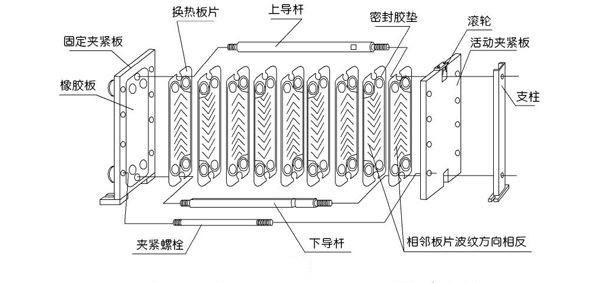
Plate Material of Plate Heat Exchanger

|
Material |
|
Applicable Medium |
|
Stainless Steel |
SUS304/SUS304L/SUS316/SUS316L/SUS321/ SUS310S/SUS317L /SMO254 |
Water, steam, edible oil, mineral oil, acid-base medium, not suitable for occasions with high chloride ion content |
|
Titanium Plate, Nickel Plate |
TA1 TA2 |
Brine, seawater and occasions with high chloride ion content |
|
Hastelloy |
Hastelloy C-276 |
Concentrated sulfuric acid, hydrochloric acid, phosphoric acid, strong oxidizing medium occasions |
|
Aluminum Plate |
|
Substitute for SUS316L in brine and seawater occasions |
Gasket Material of Plate Heat Exchanger

|
Material |
Operating Temperature |
Applicable Medium |
|
EPDM |
-20~150℃ |
Water, steam, general organic and inorganic acids, alkalis and chemical media |
|
NBR |
-20~120℃ |
Water, oil, aldehyde and general corrosive media |
|
FKM |
0~180℃ |
Organic solvents, acids, alkalis, alcohols, oils, water, steam |
|
Silicone Rubber |
-20~230℃ |
High temperature occasions, some oils, alcohol |
|
Neoprene |
-20~150℃ |
Water, Freon |
|
Food Grade Rubber |
-20~150℃ |
Various food materials, pharmaceutical materials |
Plate Type Size Table of Dismountable Plate Heat Exchanger

|
BR equal cross-section series (BRB unequal cross-section series) |
||||
|
Pipe Size |
Model |
Equipment Size |
BR pipe center distance |
BRB pipe center distance |
|
DN40 or DN50 |
BR0.12 |
580*320 |
340*146 |
|
|
BR0.18 |
830*320 |
590*146 |
|
|
|
DN65-DN80 (DN65/DN80) |
BR0.21 |
836*420 |
464*200 |
464*200 |
|
BR0.28 |
916*420 |
664*200 |
664*200 |
|
|
BR0.31 |
1016*420 |
764*200 |
764*200 |
|
|
BR0.38 |
1216*420 |
965*200 |
964*200 |
|
|
DN100 (DN100/DN125) |
BR0.36 |
1091*490 |
703*240 |
703*240 |
|
BR0.41 |
1219*490 |
830*240 |
830*240 |
|
|
BR0.50 |
1438*490 |
1050*240 |
1050*240 |
|
|
DN125-DN150 (DN125/DN150) |
BR0.46 |
1200*610 |
682*286 |
705*675*289 |
|
BR0.61 |
1500*610 |
982*286 |
1005*975*289 |
|
|
BR0.76 |
1800*610 |
1280*286 |
1305*1275*289 |
|
|
DN200 (DN150/DN200) |
BR0.65 |
1370*726 |
788*344 |
839*789*369 |
|
BR0.81 |
1630*726 |
1095*344 |
1101*1051*369 |
|
|
BR0.87 |
1726*726 |
1150*344 |
1195*1145*369 |
|
|
BR1.08 |
2064*726 |
1484*344 |
1532*1482*369 |
|
|
DN250(DN200/DN250) |
BR1.05 |
1719*837 |
1080*434 |
1130*1080*459 |
|
BR1.35 |
2189*837 |
1480*434 |
1530*1480*459 |
|
|
BR1.6 |
2489*837 |
1780*434 |
1830*1780*459 |
|
|
DN300-DN350 |
BR1.7 |
2155*1118 |
1289*585 |
|
|
BR2.0 |
2455*1118 |
1589*585 |
|
|
|
BR2.3 |
2755*1118 |
1889*585 |
|
|
|
DN400/DN450/500 |
BR2.7 |
2665*1358 |
1642*676 |
|
|
BR3.15 |
3045*1358 |
2004*676 |
|
|
|
BR3.6 |
3425*1358 |
2384*676 |
|
|
Plate type heat exchanger plate size table (shallow corrugated)

|
BR equal cross-section series (BRB unequal cross-section series) |
||||
|
Pipe Size |
Model |
Equipment Size |
BR pipe center distance |
BRB pipe center distance |
|
DN100 |
M041 |
1219*490 |
831*240 |
|
|
M05 |
1438*490 |
1050*240 |
|
|
|
DN150 |
M075 |
2070*726 |
1482*344 |
|
|
M09 |
2214*726 |
1632*344 |
|
|
|
DN200 |
M11 |
1800*610 |
1282*286 |
|
|
M12 |
2100*610 |
1582*286 |
|
|
A heat exchanger is a device that transfers some of the heat from a hot fluid to a cold fluid, also known as a heat exchanger. Heat exchangers play an important role in many industrial processes, including chemical, petroleum, power generation, and food processing. In chemical production, heat exchangers can be used as heaters, coolers, condensers, evaporators, and reboilers, among other applications. Different heat exchangers are used for different media, operating conditions, temperatures, and pressures, and their structures also vary accordingly.
A plate heat exchanger is a highly efficient heat exchanger made up of a series of corrugated metal plates stacked together. Thin rectangular channels are formed between the plates, allowing for heat exchange through the plates. Plate heat exchangers are ideal for liquid-liquid and liquid-vapor heat exchange. They are characterized by high heat exchange efficiency, low heat loss, compact and lightweight structure, small footprint, wide range of applications, and long service life. Under the same pressure drop, their heat transfer coefficient is 3-5 times higher than that of shell and tube heat exchangers, the footprint is one-third that of shell and tube heat exchangers, and the heat recovery rate can be as high as 90% or more. Plate heat exchangers are mainly divided into two categories: frame type (removable heat exchangers) and brazed type. The main types of plates include chevron corrugated plate heat exchangers, horizontal straight corrugated plate heat exchangers, and dimpled plate heat exchangers. According to the heat exchange medium, they can be classified as: water-water plate heat exchangers, steam-water high-efficiency plate heat exchangers, and high-temperature plate heat exchangers.
A plate heat exchanger unit converts the heat obtained from the primary network into domestic hot water and heating water automatically and continuously. That is, hot water enters the plate heat exchanger from the primary side inlet, undergoes heat exchange, and flows out from the primary side outlet; the secondary side return water, after having its impurities removed by a filter, enters the plate heat exchanger through the secondary side circulation pump for heat exchange, producing hot water of different temperatures for heating, air conditioning, floor heating, or domestic hot water to meet user needs.
A plate heat exchanger is a highly efficient heat exchanger made by stacking a series of metal plates with a certain corrugated shape. Thin rectangular channels are formed between the plates, and heat exchange is performed through the plates. Plate heat exchangers are ideal equipment for liquid-liquid and liquid-vapor heat exchange. They are characterized by high heat exchange efficiency, low heat loss, compact and lightweight structure, small footprint, wide application, and long service life. Under the same pressure loss, their heat transfer coefficient is 3-5 times higher than that of a tube heat exchanger, the footprint is one-third that of a tube heat exchanger, and the heat recovery rate can be as high as 90% or more.
Plate heat exchangers are mainly divided into two categories: frame type (dismountable) and brazed type. The plate types mainly include herringbone corrugated plates, horizontal flat corrugated plates, and bulb plates.
WeChat Mini Program
WeChat public account
Service line:
Mobile:+86-15064136769
+86-13869137166
Mailbox:zhilin@sdzhilin.cn
Address: South Park, Jinan Economic Development Zone, Shandong Province