

Common Faults and Solutions for Plate Heat Exchanger Units
Release time:
2021-01-11 12:05
Source:
www.sdzhilin.cn
Common faults and troubleshooting methods of plate heat exchanger units:
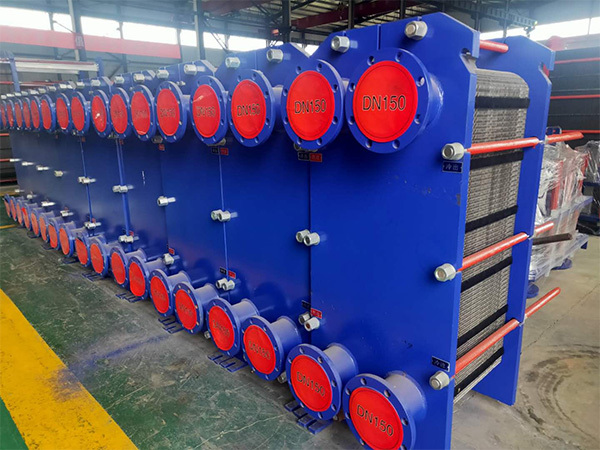
I.Plate heat exchanger unitThe operating state deviates from the process requirements. The method to handle this fault is:
1)Check if the inlet parameters of the hot and cold media are consistent with the original design values. If not, try to adjust them to the original design values. If the inlet parameters change and cannot be adjusted to the original design values, redesign calculations should be performed to increase or decrease the heat transfer area or change the process combination.
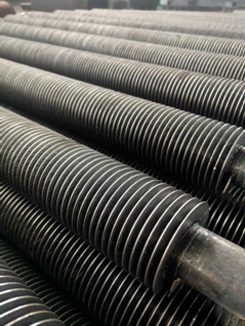
2)If the inlet parameters of the hot and cold media are consistent with the original design values, but the outlet parameters do not meet the design values, then shut down the equipment, disassemble it to check for blockages or scaling between the plates, and handle them promptly.
II.Plate heat exchanger unitThe method for leak detection after shutdown is:
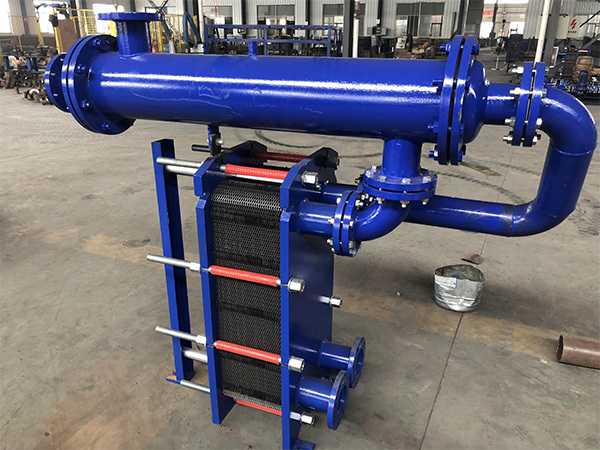
1)Disassemble the plate heat exchanger unit, remove the fouling from the plate surface, dry it, and reassemble the heat exchanger. Perform a water pressure test on one side, with a pressure of0.2 ~ 0.3MPa. Stop the test after water flows out from the other side, open the heat exchanger, and carefully observe the untested side of the plate. The wet plate is the side with holes or cracks.
2)On-site, we can also use the methods of light transmission and coloring inspection to find the waste plates. All detected waste plates and gaskets should be replaced and used after reassembly.
3)Misalignment of plate heat exchanger unit plates. For plate heat exchanger units that have been used for a long time and have large changes in medium flow rate and pressure, plate misalignment may occur. After plate misalignment, leakage may sometimes occur quickly; some leaks, although not immediately occurring, are leakage risks and should be handled promptly. The main cause of misalignment is: the deformed sealing gasket slides out of the gasket groove. To handle this misalignment, the deformed plate and gasket that have slipped out of the gasket groove should be replaced in time.
4)If the site lacksplate heat exchanger unitmaintenance equipment, the plate heat exchanger unit needs to be replaced in time during use, whether it is plate deformation, cracking, or perforation, or gasket aging or damage. If there are not enough spare parts on-site, and the heat exchanger equipment has neither spare parts nor downtime, then simple on-site handling should be performed. The method of simple on-site handling is to extract the damaged and leaking plates in pairs.
The above are the common faults and troubleshooting methods of plate heat exchanger units. Only by correctly using the heat exchanger unit can the smooth operation of the equipment be ensured.
Previous Page
Related News
WeChat Mini Program
WeChat public account
Service line:
Mobile:+86-15064136769
+86-13869137166
Mailbox:zhilin@sdzhilin.cn
Address: South Park, Jinan Economic Development Zone, Shandong Province